Architecting a Multi-Tenant SaaS ERP for Schools (EduOps)

How I Architected a Multi-Tenant SaaS ERP for Schools (EduOps)
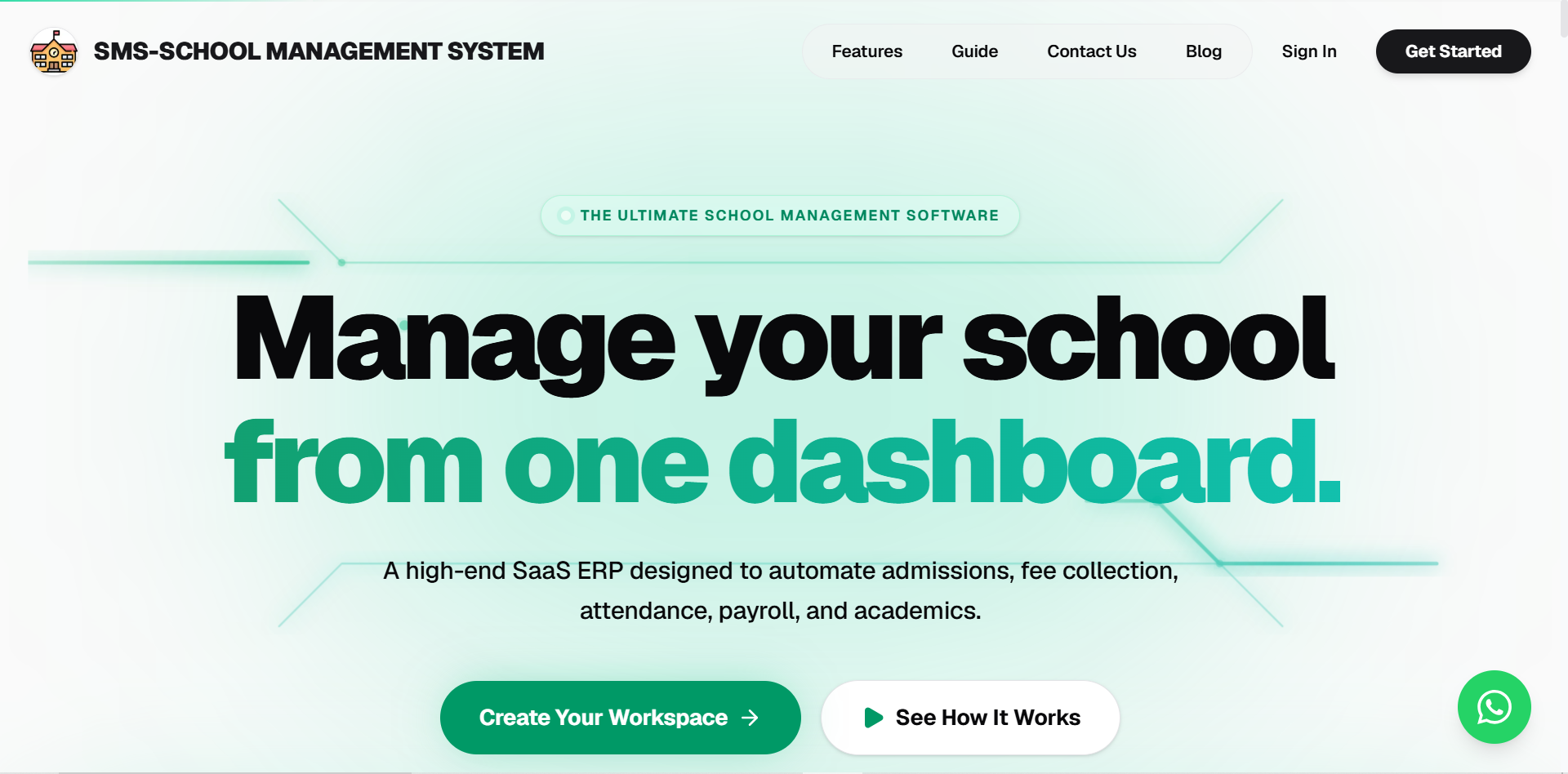 EduOps (SMS): A Multi-Tenant SaaS platform engineered by Muhammad Zubair.
Building software for a single company is straightforward. Building a Multi-Tenant SaaS ERP that handles thousands of different schools—each with their own students, financial ledgers, and staff—is a massive engineering challenge.
In this case study, I will break down how I engineered EduOps (SMS), a high-performance SaaS platform designed to unify educational infrastructure across web and mobile.
👉 View the Live Production SaaS Here
🚨 The Problem: Fragmented School Infrastructure
Most schools run on a chaotic mix of tools: Excel for fee management, WhatsApp for announcements, and paper registers for attendance. This fragmentation leads to lost revenue, data entry errors, and massive administrative overhead.
I needed to build a centralized "Command Center" that could handle:
- Complex financial ledgers and payroll.
- Real-time hardware integration (QR Scanners).
- Strict data isolation (School A cannot ever see School B's data).
🏗️ The Solution: Multi-Tenant Architecture & The Principal's Dashboard
To solve this, I architected EduOps with a strict multi-tenant database design. Every query in the system is scoped to a tenant_id, ensuring bank-level data privacy.
At the core of the platform is the Principal's Dashboard, a real-time command center that aggregates millions of data points into actionable metrics.
1. Superadmin "Impersonation Mode" (SaaS Master)
One of the hardest technical challenges in SaaS is customer support. If a school principal reports a bug, how does the support team see what they see without asking for their password?
- The Engineering Fix: I built a secure Impersonation Mode. As the SaaS Master, I can securely assume the identity of any tenant (e.g., Bambina Elementary School) to view their exact dashboard, debug issues, and seamlessly "Return to Admin" without compromising session security.
2. The Automated Financial Engine
Handling money requires absolute precision. I built a double-entry ledger system that tracks the entire financial lifecycle in real-time:
- Live Revenue Tracking: The dashboard instantly calculates Net Profit by subtracting Total Outflow (Staff Salaries + Monthly Bills) from Collected Fees.
- Defaulter Management: Tracks Pending Fees and identifies recent defaulters, allowing admins to send one-click WhatsApp reminders.
- Yearly Analytics: Generates dynamic bar charts comparing Historical Revenue vs. Expenses month-by-month.
3. Academic Oversight & At-Risk Tracking
The system doesn't just track money; it tracks student success. I engineered an academic oversight module that automatically flags students who need help:
- At-Risk Students: The system automatically filters and flags students scoring below 40% in specific subjects.
- Attendance Matrix: Tracks Daily Attendance Scores (Poor, Average, Good) and instantly flags students or staff who have been absent for 7+ days.
- Curriculum & Timetable: Centralized management for School Periods, Question Papers, and Library resources.
4. Offline-First QR Attendance & ID Center
Schools in developing regions often face internet outages.
- The Engineering Fix: I built an offline-first scanning mode. The system turns any mobile device into a live QR kiosk. It scans student ID cards (generated directly from the built-in ID Card Center), stores the timestamps locally, and automatically syncs to the cloud the moment the internet connection is restored.
📱 Comprehensive Module Ecosystem
To make the system truly ubiquitous, I developed a massive suite of interconnected modules, including:
- Transport & Library Management
- Certificate Generator (School Leaving, Character Certificates)
- Notice Board & School Calendar (Targeted announcements and holiday tracking)
- AI Analytics (Chat with your school's database in plain English)
By utilizing a unified REST API backend, the web platform and the companion Mobile App stay perfectly in sync in real-time.
🚀 The Result
EduOps (SMS) is now a production-ready SaaS capable of onboarding thousands of institutions. It features a 99.9% uptime guarantee, automated daily cloud backups, and strict role-based access control (RBAC).
Want to see the system in action? You can explore the live product, view the feature set, and request a free trial directly on the official platform:
👉 Visit SMS - School Management System

About the Developer
I am Muhammad Zubair, a Software, DevOps, and Platform Engineer from Pakistan specializing in SaaS Architecture, Cloud Infrastructure, and Full-Stack Systems.
- GitHub: Muhammad Zubair's Repositories (76+ Repos)
- Portfolio: mzubair.online