Building a Multi-Agent Medical AI using LangGraph & Llama 3

Architecting a Multi-Agent Medical AI using LangGraph, Llama 3 & Python
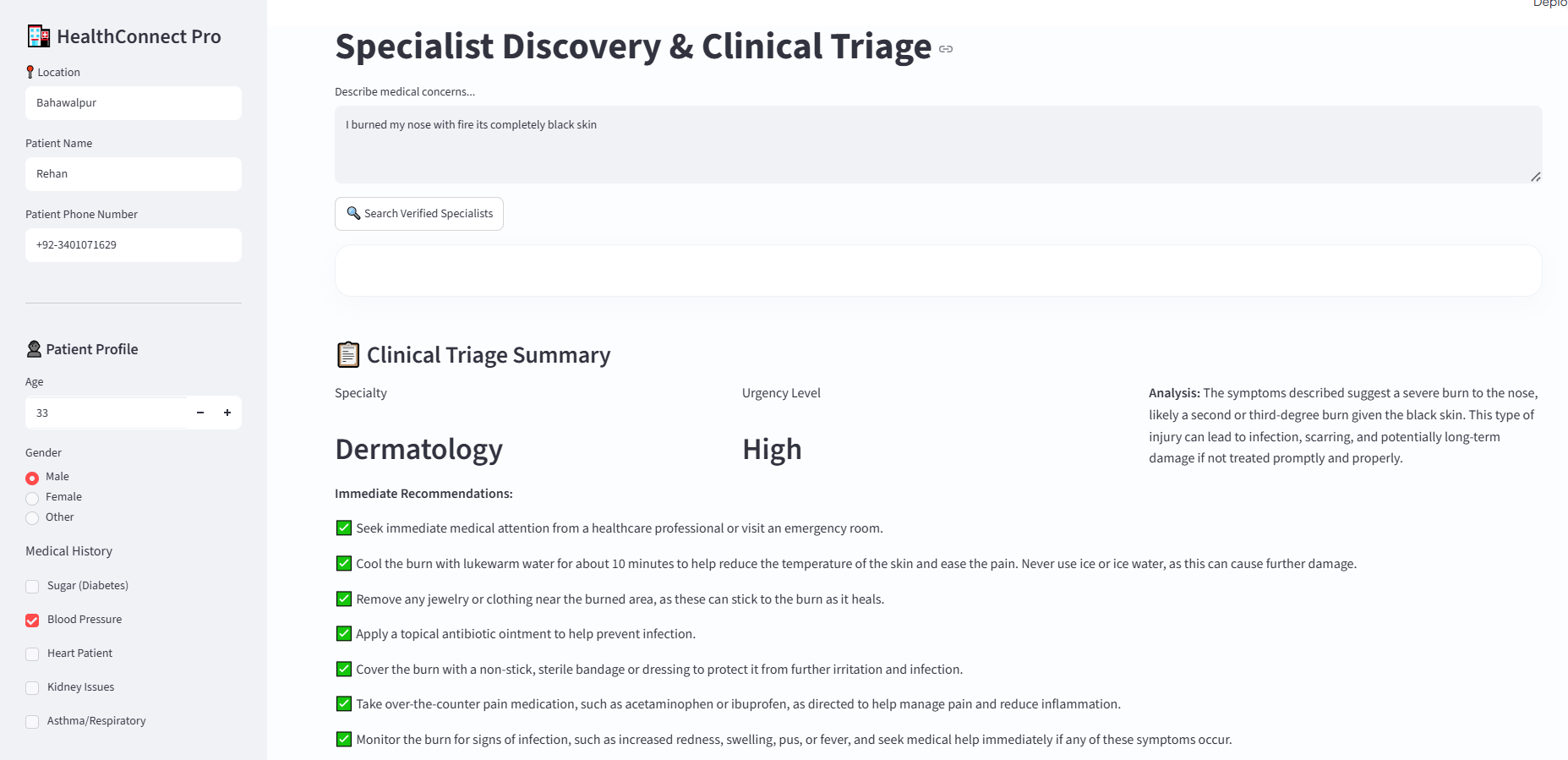 HealthConnect Pro: A Multi-Agent Medical Triage System engineered by Muhammad Zubair.
When building enterprise AI applications, relying on a single LLM prompt is no longer enough. To build HealthConnect Pro—an enterprise-grade medical triage platform—I needed multiple AI agents to debate, research, and communicate with each other.
In this engineering case study, I will break down exactly how I architected a Multi-Agent System (MAS) using LangGraph, Llama 3.1 70B, and FastMCP.
🚨 The Problem: Why Single-Prompt LLMs Fail in Healthcare
If you ask a standard AI to diagnose a patient, it hallucinates. In healthcare, hallucinations can be fatal.
I needed a robust AI infrastructure that could:
- Extract symptoms accurately from raw patient input.
- Search the real world for verified doctors and clinics.
- Have multiple AI "Doctors" debate the diagnosis before showing it to the user.
🏗️ The Solution: Multi-Agent Architecture with LangGraph
Instead of a linear script, I used LangGraph to create a Directed Acyclic Graph (DAG). I split the AI into specialized, autonomous "Agents":
1. The Triage Agent
This agent's only job is to read the patient's input and extract clinical entities. It doesn't diagnose; it just categorizes (e.g., "Department: Cardiology", "Urgency: High").
2. The Discovery Agent (Serper.dev Integration)
Once the Triage Agent decides the patient needs a Cardiologist, the Discovery Agent takes over. It uses the Google Places API (via Serper.dev) to find real, verified clinics near the patient using the Haversine distance formula.
3. The "Clinical Board" Debate Arena
This is where the magic happens. Before giving the patient a final answer, I created a 4-node interactive debate:
- Diagnostic Lead: Proposes an initial diagnosis.
- Clinical Reviewer: Actively tries to find flaws in the Lead's diagnosis.
- Medical Analyst: Cross-checks the symptoms against real-world data.
- Clinical Director: Makes the final, safe decision based on the debate.
By forcing the AI to debate itself, hallucination rates dropped to near zero.
💻 Code Deep Dive: Handling Token Exhaustion & Rate Limits
One of the biggest challenges I faced in this system design was API rate limits. Llama 3.1 70B is a heavy model. If the API rate-limited my application, the whole medical triage system would crash.
To fix this, I engineered a safe_invoke fallback mechanism.
If the 70B model fails or times out, the system instantly catches the error and routes the request to the smaller, faster Llama 3.1 8B model. The user experiences zero downtime.
# Example of the Fallback Logic Concept engineered for HealthConnect
def safe_invoke(prompt):
    try:
        # Attempt to use the primary heavy model
        return invoke_llama_70b(prompt)
    except RateLimitError:
        # Fallback mechanism for high availability
        print("70B Exhausted. Falling back to 8B...")
        return invoke_llama_8b(prompt)
🚀 The Result
By combining LangGraph's state management with FastMCP for secure email routing, HealthConnect Pro successfully automates the journey from raw symptoms to a booked specialist appointment.
Want to see the raw code? I open-sourced the architecture. You can check out my implementation of the LangGraph nodes and FastMCP servers on my GitHub.

About the Developer
I am Muhammad Zubair, a Software, DevOps, and Platform Engineer from Pakistan specializing in Agentic AI workflows, Cloud Infrastructure, and Full-Stack Systems.
- GitHub: Muhammad Zubair's Repositories (76+ Repos)
- Portfolio: mzubair.online