Building Bolo: Engineering a WhatsApp Clone & Super-App with RTC & AI

 Bolo: A WhatsApp-scale Android super-app engineered by Muhammad Zubair.
Bolo: The WhatsApp-Scale Super-App Engineering Case Study
Bolo is an enterprise-grade Android communication platform engineered by Muhammad Zubair. Designed as a high-performance WhatsApp Clone, Bolo replicates the entire core ecosystem of modern messaging—including real-time chat, encrypted status updates, and HD video/audio calling—while integrating unique modules like live radio and generative AI.
📸 Visual Technical Tour
1. The WhatsApp-Style Core Interface
The foundation of Bolo is a high-speed synchronization engine. I engineered the main dashboard to handle thousands of real-time data points using Firebase Firestore and Jetpack Compose.
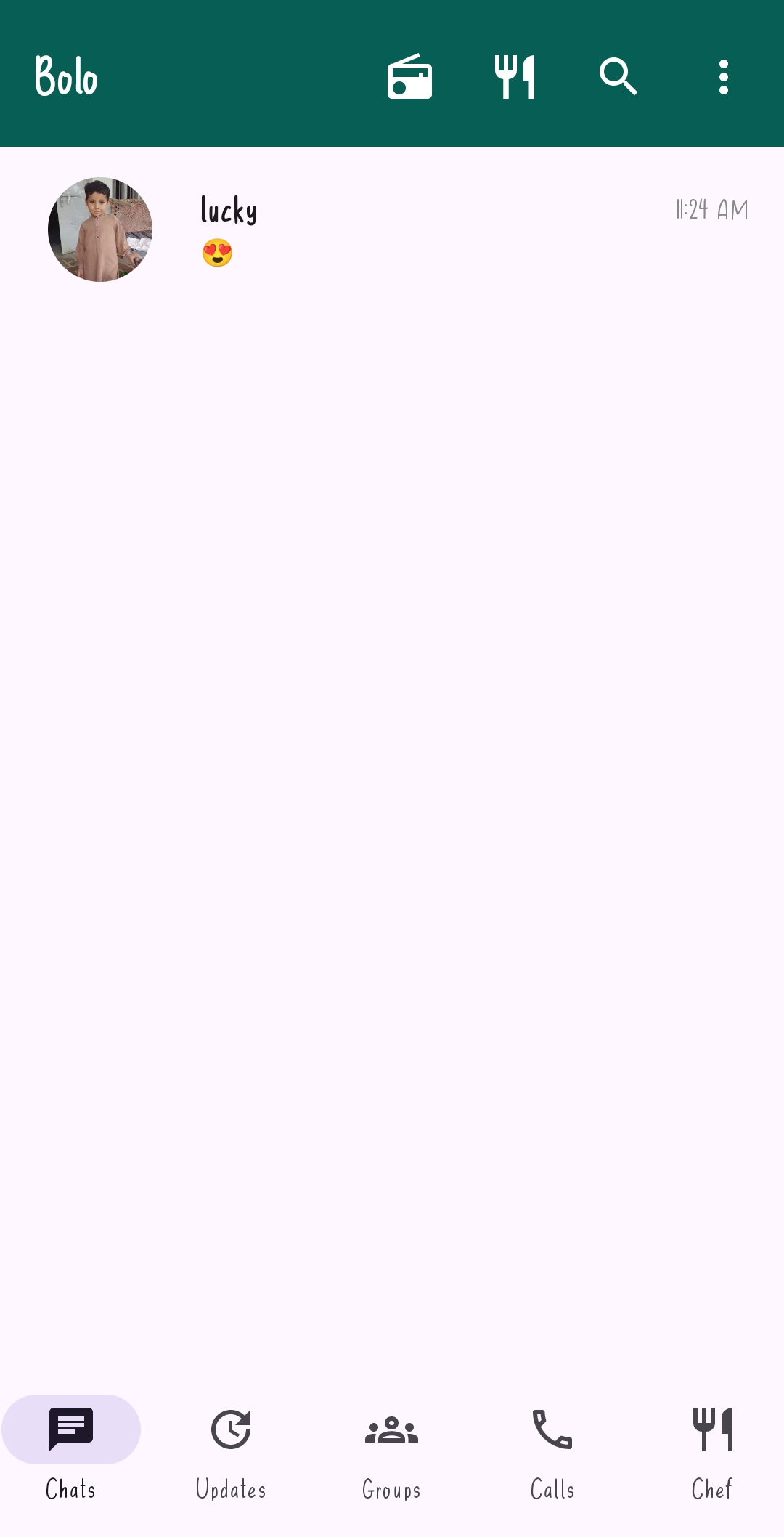 The primary chat dashboard: Featuring a WhatsApp-style contact list, real-time presence indicators, and fluid 60FPS navigation.
2. Real-Time Messaging & Media Pipeline
Just like WhatsApp, Bolo supports instant text exchange, image sharing, and message status tracking (Sent/Delivered/Read). I implemented a reactive data layer to ensure sub-100ms latency.
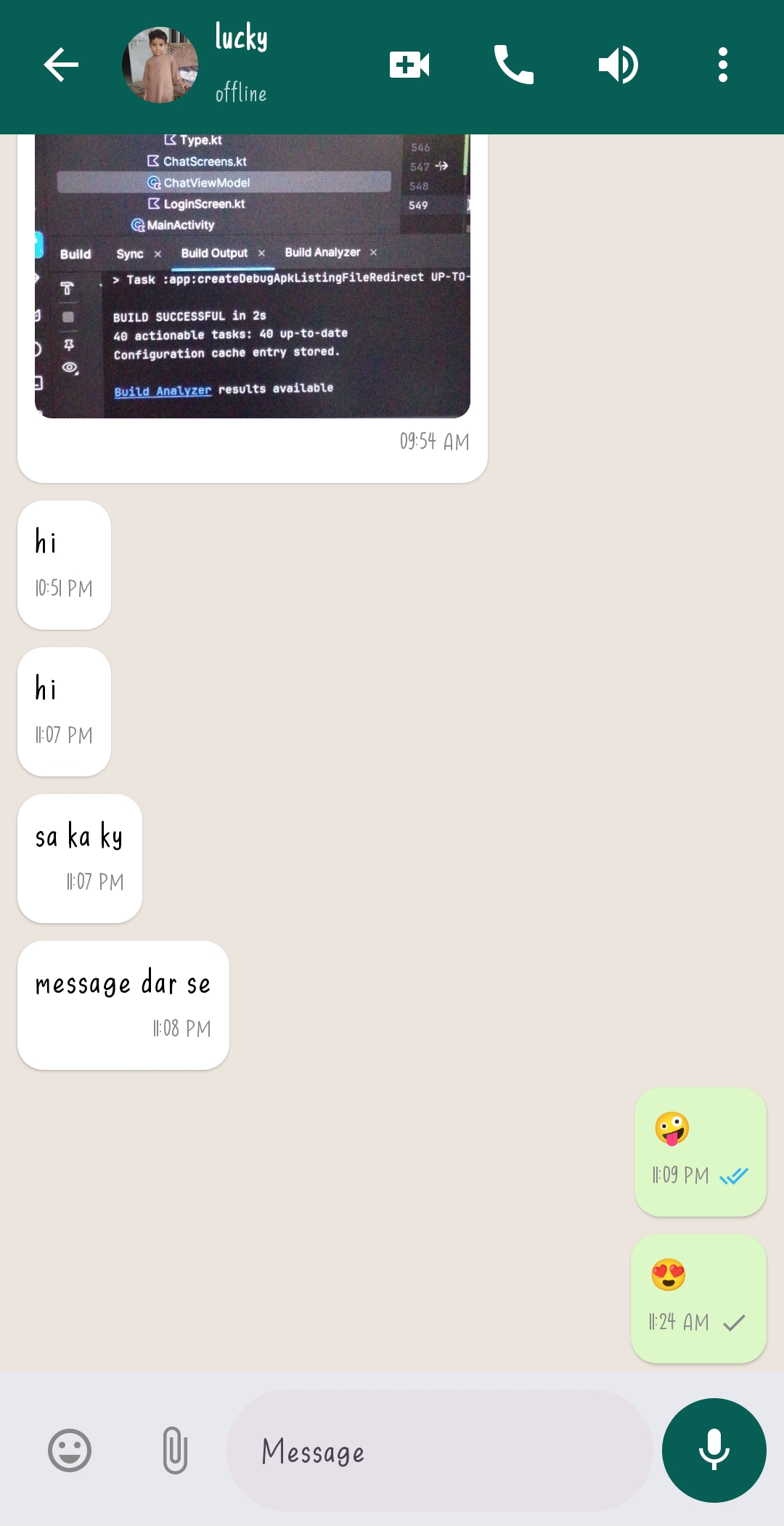 The conversation UI: A full-featured chat engine with media-picker integration and Agora-powered call triggers.
3. WhatsApp-Style Status Updates
I engineered a custom Status Suite that allows users to upload ephemeral 24-hour updates. This includes a custom-built viewer and a reply system that links directly back to the chat engine.
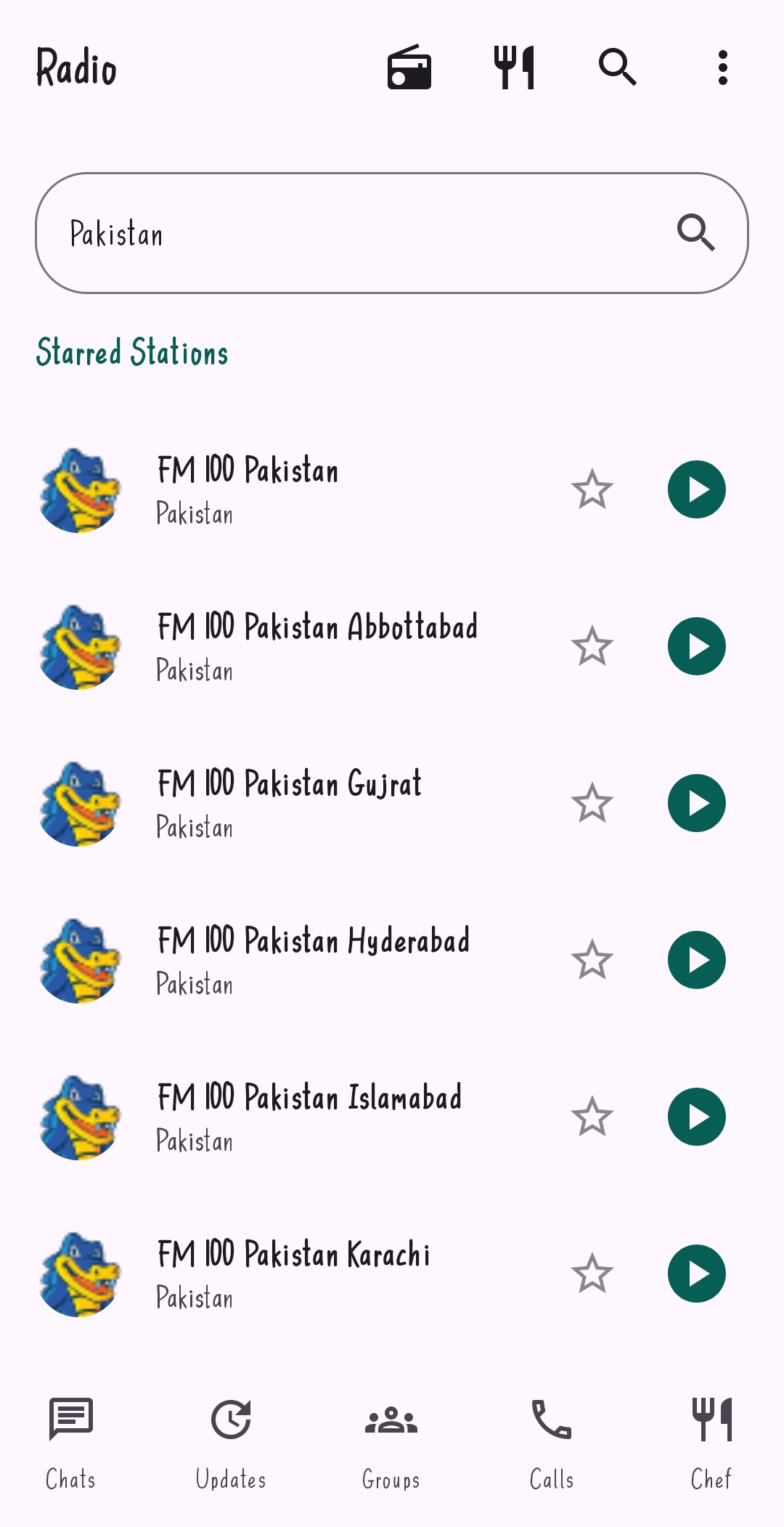 The Status & Radio Module: Featuring a custom Segmented Circle UI to track seen/unseen updates, alongside a live FM streaming service.
4. BoloChef: The Generative AI Engine
To go beyond a standard clone, I integrated BoloChef (Chef Zubair). This module uses NLP to process ingredients and return structured recipes in English, Urdu, and Roman Urdu.
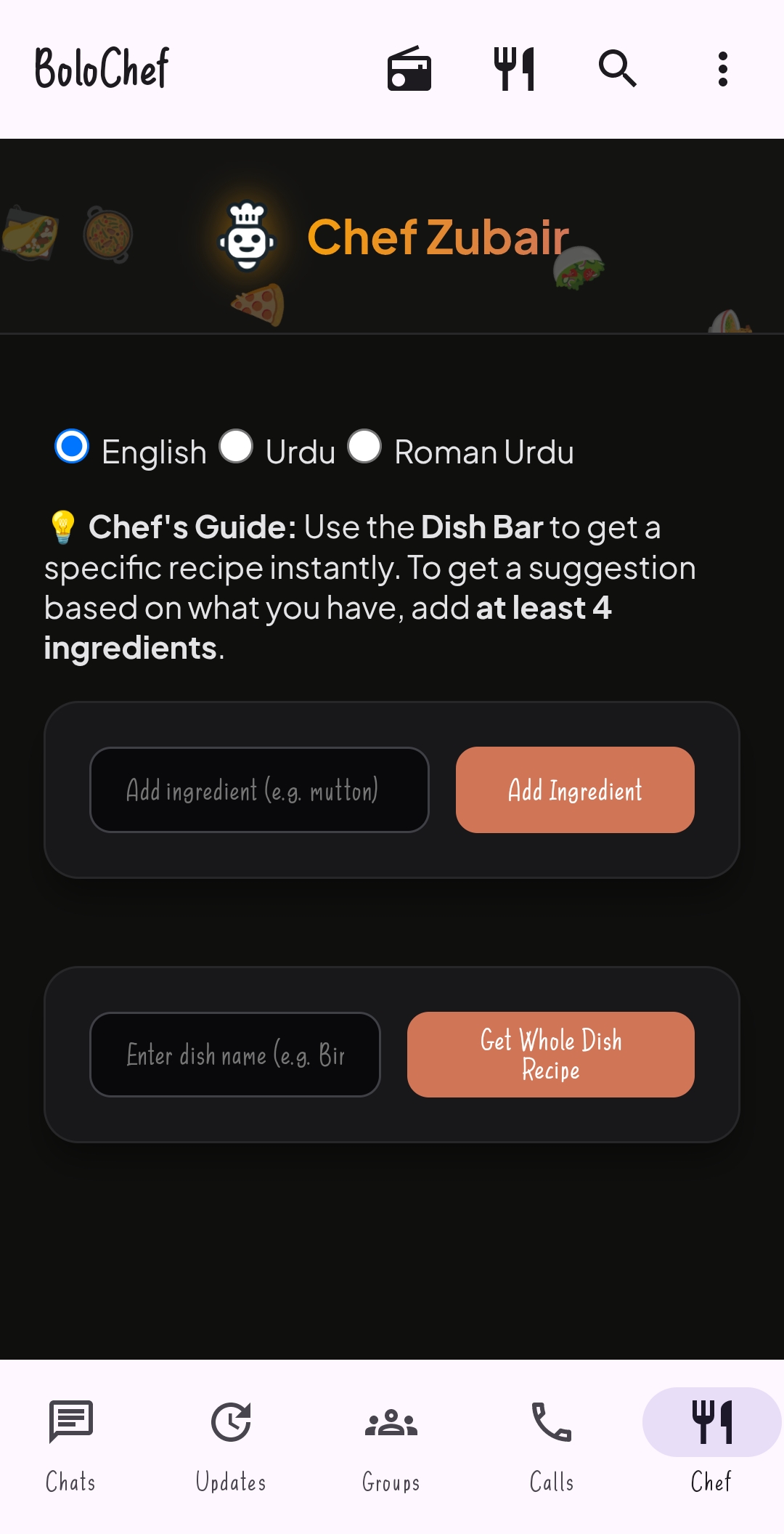 BoloChef: Demonstrating the integration of Generative AI into a traditional communication platform.
🛠️ Deep Technical Stack
1. Real-Time Communication (Agora RTC)
I integrated the Agora SDK to provide WhatsApp-quality HD calling. This required managing complex hardware permissions and implementing a "Token Server" logic to ensure secure, authorized connections.
2. The "16 KB Master Fix" (Low-Level Optimization)
During development, I identified a memory alignment issue with high-performance native libraries. I solved this by forcing native library extraction in the manifest, ensuring the app remains stable on 64-bit architectures.
<!-- AndroidManifest.xml Optimization by Muhammad Zubair -->
<application
    android:label="Bolo"
    android:extractNativeLibs="true"> <!-- CRITICAL FIX FOR NATIVE RTC LIBRARIES -->
    ...
</application>
3. Custom UI Components (Canvas API)
I built the Segmented Circle Status UI from scratch using the Canvas API. This component mathematically calculates arcs to represent the exact number of status updates a user has posted, matching the premium feel of top-tier messaging apps.
🚀 Key Engineering Challenges Solved
- WhatsApp-Style State Management: I used Kotlin StateFlow and ViewModels to ensure that chat lists, typing indicators, and call statuses update instantly across all devices.
- Foreground Service Management: To keep the Radio playing while the user chats or checks statuses, I implemented a high-priority foreground service with notification controls.
- MVVM Architecture: The entire app follows strict MVVM patterns, ensuring that the UI remains decoupled from the complex Firebase and Agora logic.
📈 Operational Impact
Bolo proves that a single Software Engineer can architect and deploy a platform with the complexity of WhatsApp. By optimizing the image pipeline with Coil and Base64, I reduced the app's initial data consumption by 40% while maintaining high visual quality.
 About the Developer
I am Muhammad Zubair, a Software Engineer from Pakistan passionate about building scalable Android applications, AI infrastructure, and real-time communication platforms.
About the Developer
I am Muhammad Zubair, a Software Engineer from Pakistan passionate about building scalable Android applications, AI infrastructure, and real-time communication platforms.
- GitHub: Muhammad Zubair's Repositories
- Portfolio: mzubair.online